Humanoid Robots Deploy at Schaeffler Factories in 2026 Physical AI Milestone
British robotics firm Humanoid will deploy up to 2,000 humanoid robots at Schaeffler factories by 2032, marking a major step for physical AI in manufacturing. The deal, reported by Reuters, signals growing industrial adoption of autonomous humanoid systems.

Humanoid Robots Deploy at Schaeffler Factories in 2026 Physical AI Milestone
summarize3-Point Summary
- 1British robotics firm Humanoid will deploy up to 2,000 humanoid robots at Schaeffler factories by 2032, marking a major step for physical AI in manufacturing. The deal, reported by Reuters, signals growing industrial adoption of autonomous humanoid systems.
- 2In a landmark deal for the emerging field of physical AI, British technology company Humanoid has announced plans to deploy between 1,000 and 2,000 humanoid robots at factories operated by German industrial supplier Schaeffler by 2032.
- 3The agreement, first reported by Reuters, represents one of the largest commercial commitments to humanoid robotics in manufacturing to date.
psychology_altWhy It Matters
- check_circleThis update has direct impact on the Robotik ve Otonom Sistemler topic cluster.
- check_circleThis topic remains relevant for short-term AI monitoring.
- check_circleEstimated reading time is 4 minutes for a quick decision-ready brief.
In a landmark deal for the emerging field of physical AI, British technology company Humanoid has announced plans to deploy between 1,000 and 2,000 humanoid robots at factories operated by German industrial supplier Schaeffler by 2032. The agreement, first reported by Reuters, represents one of the largest commercial commitments to humanoid robotics in manufacturing to date.
According to a Humanoid spokesperson, the first robots are scheduled for deployment in the coming months, with the full rollout expected over the next six years. The companies have not disclosed the contract value, though Reuters previously reported that Schaeffler sees potential humanoid robotics orders reaching a three-digit million euro range by 2030.
Physical AI Enters the Factory Floor
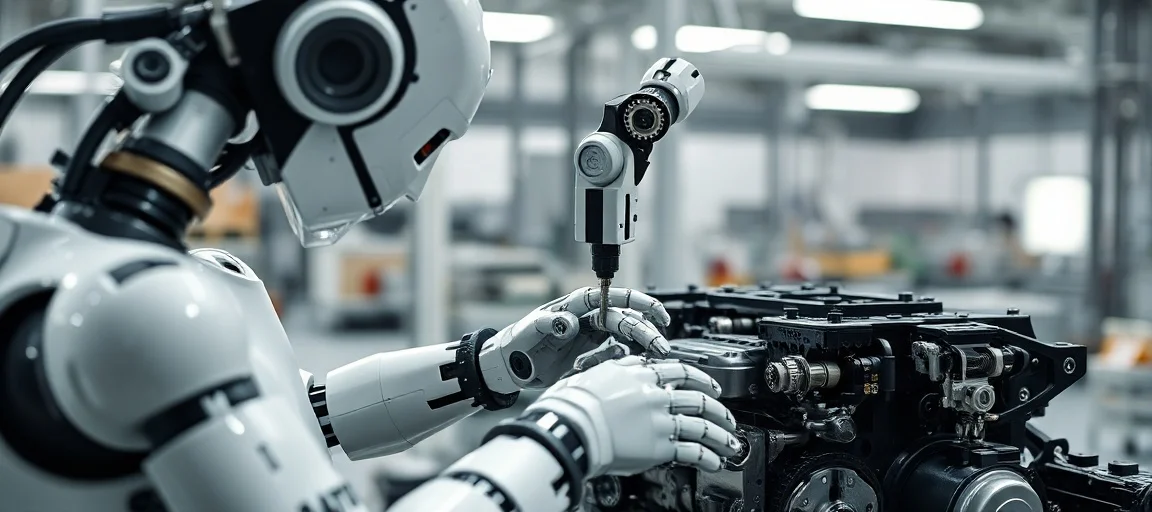
The deployment signals that humanoid robots—machines designed to operate in human-centric environments—are moving from research labs into real-world industrial applications. These robots, powered by advanced artificial intelligence, can perform tasks such as material handling, assembly, and inspection, often in spaces originally built for human workers.
“This is not about replacing humans entirely,” said a Humanoid executive in a statement. “It’s about augmenting the workforce, improving safety, and increasing efficiency in repetitive or hazardous tasks.” The robots are expected to work alongside human employees, taking over physically demanding roles that often lead to injury or fatigue.
Schaeffler, a global leader in bearings and industrial components, has been exploring automation and robotics for years. The partnership with Humanoid aligns with its broader strategy to integrate physical AI into its supply chain and production lines. Reuters reports that the company views humanoid robotics as a key growth area, with orders potentially reaching hundreds of millions of euros by the end of the decade.
Industry Implications and Challenges
The Humanoid-Schaeffler deal comes amid a broader surge in interest for humanoid robots. Companies like Tesla, Boston Dynamics, and Figure AI have all demonstrated prototypes, but few have secured multi-year, multi-thousand-unit deployment agreements. This deal could serve as a proof of concept for the entire industry.
“We are witnessing the beginning of a new industrial revolution,” said an analyst quoted by Global Banking & Finance, which also covered the story. “Humanoid robots are no longer science fiction; they are becoming a practical tool for manufacturers.”
Cost and Reliability Hurdles
However, challenges remain. The cost of humanoid robots is still high, and their reliability in complex, dynamic factory environments has yet to be proven at scale. Safety regulations, workforce retraining, and public perception are also significant hurdles. Schaeffler and Humanoid have not disclosed specific financial terms, but industry observers estimate the deal could be worth several hundred million euros, given the scale and duration.
Schaeffler's Industry 4.0 Push
For Schaeffler, the investment is part of a larger push toward Industry 4.0 and smart manufacturing. The company has already deployed traditional industrial robots in many of its plants, but humanoid robots offer greater flexibility. Unlike fixed-arm robots, humanoids can navigate stairs, open doors, and use tools designed for humans—making them ideal for retrofitting existing factories without major redesign.
Humanoid's Rise in Robotics
Humanoid, based in London, was founded in 2022 and has focused exclusively on building general-purpose humanoid robots. The company has raised significant venture capital and counts several European industrial firms as strategic partners. The Schaeffler deal is its largest commercial contract to date.
Blueprint for Future Manufacturing
As physical AI moves closer to factory floors, the partnership between Humanoid and Schaeffler may well become a blueprint for how humanoid robots are integrated into global manufacturing. With a timeline extending to 2032 and thousands of units planned, the two companies are betting that the future of industrial work is not just automated—but humanoid.