LaTA: FERPA-Compliant Local LLM Autograder (2026) Cuts STEM Grading Time by 70%
LaTA, a FERPA-compliant local-LLM autograder, transforms STEM education by enabling secure, zero-cost grading on campus hardware without altering existing LaTeX workflows. Deployed at Oregon State University, it cuts grading time and boosts student performance.

LaTA: FERPA-Compliant Local LLM Autograder (2026) Cuts STEM Grading Time by 70%
summarize3-Point Summary
- 1LaTA, a FERPA-compliant local-LLM autograder, transforms STEM education by enabling secure, zero-cost grading on campus hardware without altering existing LaTeX workflows. Deployed at Oregon State University, it cuts grading time and boosts student performance.
- 2Developed by researchers at Oregon State University, LaTA eliminates the need to transmit student work to external AI APIs—solving a critical privacy and compliance issue that has long plagued automated grading systems.
- 3Running entirely on on-premises hardware, LaTA leverages a locally hosted open-weight chain-of-thought model (gpt-oss:120b) to grade LaTeX-based assignments with precision, speed, and zero marginal cost per submission.
psychology_altWhy It Matters
- check_circleThis update has direct impact on the Yapay Zeka ve Toplum topic cluster.
- check_circleThis topic remains relevant for short-term AI monitoring.
- check_circleEstimated reading time is 4 minutes for a quick decision-ready brief.
LaTA: FERPA-Compliant Local LLM Autograder (2026) Cuts STEM Grading Time by 70%
LaTA, a FERPA-compliant local-LLM autograder, is redefining how upper-division STEM courses manage assessment. Developed by researchers at Oregon State University, LaTA eliminates the need to transmit student work to external AI APIs—solving a critical privacy and compliance issue that has long plagued automated grading systems. Running entirely on on-premises hardware, LaTA leverages a locally hosted open-weight chain-of-thought model (gpt-oss:120b) to grade LaTeX-based assignments with precision, speed, and zero marginal cost per submission.
How LaTA Ensures FERPA Compliance
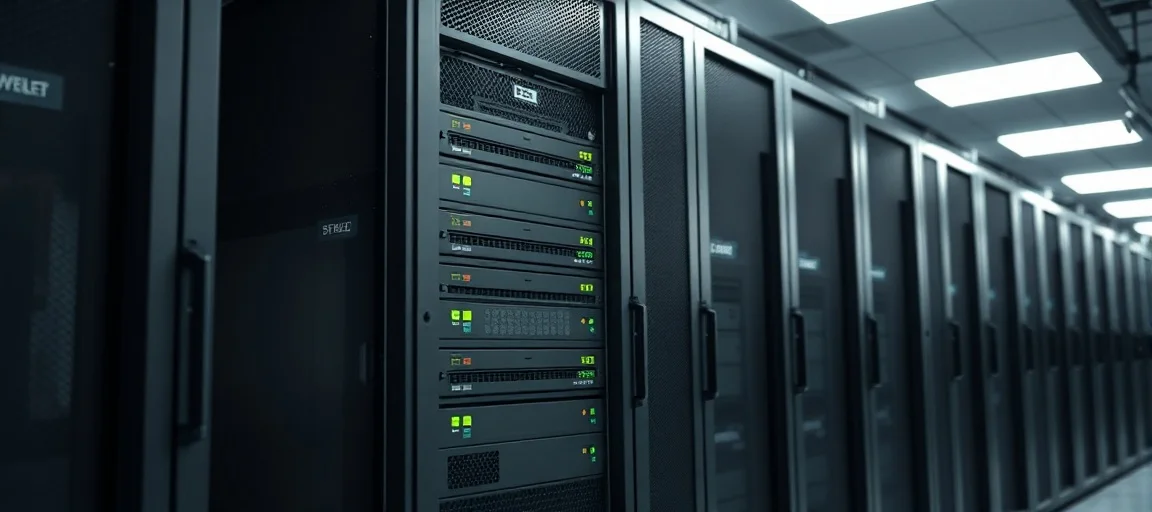
Unlike cloud-based grading tools that send student submissions to third-party servers, LaTA processes all data locally on institutional hardware. This on-premises AI architecture ensures no student names, IDs, or academic work ever leave the campus network. By avoiding data transmission entirely, LaTA meets FERPA requirements without complex contracts or legal overhead. Institutions can audit every step of the grading pipeline, ensuring full transparency and accountability for academic records.
The Role of Chain-of-Thought in Automated Grading
LaTA uses a fine-tuned open-weight chain-of-thought model (gpt-oss:120b) to simulate human-like reasoning when evaluating student solutions. Instead of simple pattern matching, the model breaks down each LaTeX submission into logical steps, compares them against instructor-defined reference paths, and assigns scores based on conceptual accuracy—not just syntax. This approach dramatically reduces false positives and preserves pedagogical intent, making it ideal for complex STEM problems in physics, engineering, and applied math.
Deploying LaTA On-Premises
LaTA runs on commodity hardware like a single Mac Studio or Linux server, requiring no GPU clusters or cloud subscriptions. Its lightweight design makes it accessible to community colleges and public universities with limited IT budgets. Deployment takes under an hour via Docker, and all models are stored locally, ensuring continuous operation even during network outages. With AGPLv3 licensing, institutions retain full control over updates, custom rubrics, and data retention policies.
LaTeX Workflow Integration
LaTA accepts native LaTeX submissions—no conversion needed—making adoption seamless for STEM faculty already using LaTeX for problem sets and exams. Students submit .tex files as usual, and LaTA parses equations, diagrams, and derivations natively. Instructors define scoring rubrics in simple YAML, enabling consistent grading across hundreds of submissions. This alignment with existing workflows minimizes training time and builds trust among faculty wary of AI disruption.
Results: Accuracy, Confidence, and Engagement
In Winter 2026, LaTA was deployed in ME 373 (Mechanical Engineering Methods), grading over 200 students’ weekly assignments. Each submission was processed in 1–3 minutes, enabling rapid feedback and unlimited regrading of corrected work. This efficiency freed teaching assistants to shift focus from grading to mentorship, expanding office hours and deepening student engagement.
Results were striking. The instructor-confirmed error rate remained between 0.02% and 0.04% per rubric item—comparable to human grading accuracy. More significantly, students in the LaTA-graded cohort outperformed their predecessors by 11% on the midterm and 8% on the final exam. A survey of 159 students revealed statistically significant gains (p < 10-27) in self-assessed confidence across all learning objectives, with average Likert increases of +1.49 points.
LaTA’s open-source nature, released under AGPLv3, allows institutions to audit, adapt, and deploy the system without vendor lock-in. Its design prioritizes pedagogical integrity over automation for automation’s sake, ensuring that AI enhances—rather than replaces—educator judgment. By anchoring grading in familiar LaTeX workflows, LaTA minimizes adoption friction while maximizing trust.
As universities grapple with rising enrollment and shrinking staffing, LaTA offers a scalable, ethical, and effective solution. It demonstrates that powerful AI tools can be deployed responsibly—without compromising student data or educational outcomes. LaTA is not just a grading tool; it’s a model for how AI can serve education with integrity.
LaTA, a FERPA-compliant local-LLM autograder, sets a new standard for secure, high-impact educational technology in STEM.